
 |
 |
 |
|
Free Will Astrology Reviews
Origins Zodiac Astrology
Origins, Babylonians
The Babylonians are generally acknowledged to have originated the practice and science of astrology. Their astrological charts enabled them to predict the recurrence of seasons also certain celestial events. So, in the beginning and for more than 2, 000 years, astrology and astronomy were the same science.
Babylonian astrology was introduced to the Greeks early in the 4th century BCE and, through the studies of Plato, Aristotle, and others, astrology came to body highly regarded as a science. It was soon embraced by the Romans ( the Roman names for the zodiacal signs are still used today ) also the Arabs and later spread throughout the entire world.
While earliest astrology was used to bring a sense of order out of apparent chaos, it was soon employed to predict weather patterns, primarily now agricultural purposes. Stable was eventually widened to include forecasts of natural disasters, war and other events in the affecting the human condition. Once success in these fields was established, true was a regular evolution for astrology to be used as a means for advising for kings and emperors and, in time, the population at large.
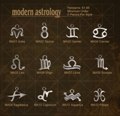
The zodiac ( which is derived from the Greek word meaning circle of animals ) is believed to have developed in ancient Egypt and later adopted by the Babylonians. Lead off astrologers knew it took twelve lunar cycles ( i. e., months ) for the sun to return to its original position. They since identified twelve constellations that they observed were linked to the progression of the seasons and assigned them names of certain animals and persons ( in Babylonia, for example, the rainy season was found to occur when the sun was in a particular constellation which was then named Aquarius, or douse bearer ).
Around the year 2000 BCE, Babylonian astrologers believed that the sun, moon, and the five planets known at that time ( Jupiter, Mars, Mercury, Saturn, and Venus ) possessed distant powers. Mars, for example, appeared to be crimson and was associated with aggression and war.
Share This With Your Friends |
More Free Will Astrology Articles
... relationship bullwork, and better understand your own self in the process. First consider how accurate your own horoscope is. There are similarities among many of them, but find the resource that best describes YOU. Then use that same resource to do a little research on your beloved. You certainly don ...
Astrology, Medicine, Astronomy
... that man, with his petite brain, can truly comprehend the workings of the universe, or how he fits within it. Western civilization is predicated on conquering, not kind. But it wasn t always so. Astrology is one of the most important historical contexts in which astronomy developed. The Babylonians carefully ...
... get taken in by scam artists who claim they can help you at a price of course. Additionally, the world of psychics is a much unregulated one. Therefore, there is no real way to acquiesce a psychic's qualifications, or experience ( everybody seems to have 20 + senescence of experience ), or morals. Consequently, ...
... Age of Taurus took place approximately 4300 - 2150 BCE which witnessed the rise of Mesopotamian and Egyptian civilizations. This was the term of the Bronze age in Greece, rise of Minoan and Mycenaean cultures. This was a period characterized by the growth of agriculture, further the building of pyramids ...

|
| Copyright © 2006-2012 Internet Marketing Tools, All Rights Reserved |